
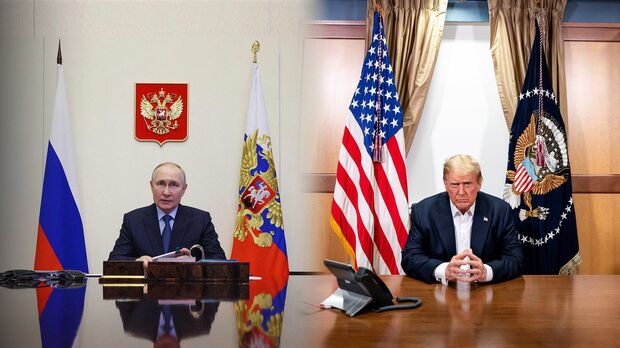
In recent years the relationship between Donald Trump (U.S. President) and Vladimir Putin (Russian President) has become a focal point of international diplomacy. Their planned and actual engagements—meetings, phone calls, nddailyupdates summits—carry large implications, especially concerning the war in Ukraine, global security, and U.S.–Russia relations.
1. Timeline of Key Interactions
- On February 12 2025, Trump and Putin held a direct phone call—reported to last about 90 minutes—marking their first major one-on-one conversation since the Russia-Ukraine war escalated. Wikipedia
- On August 15 2025, they met in person at a summit in Anchorage, Alaska, at the Joint Base Elmendorf–Richardson. The Guardian+3Wikipedia+3Wikipedia+3
- Talks on a follow-up summit in Budapest were floated, with logistics and timing in flux, but ultimately the meeting was called off. The Guardian+2Wikipedia+2
- As of early November 2025, the Kremlin publicly stated there is “no need” for a meeting between Trump and Putin at this point, citing the need for more detailed preparation. The Kyiv Independent+1
2. What Happened in Alaska?
At the Alaska summit in August:
- Trump described the meeting as “very productive,” even though no formal cease-fire agreement or diplomatic breakthrough emerged. Reuters+1
- Putin used the occasion to press Russia’s demands: among them, territorial concessions by Ukraine (notably in Donetsk and Luhansk) and a freeze in fighting elsewhere. The Guardian+1
- The summit generated concern among Ukraine and its European allies, who feared that U.S. mediation might edge toward concessions unfavorable to Ukraine’s sovereignty. AP News+1
3. Major Themes & Stakes
Ukraine War Resolution: The core driver of these interactions is the ongoing war between Russia and Ukraine. Trump’s engagement with Putin signals American willingness to explore settlement options; Russia, however, remains fixed on maximalist terms.
Territory vs. Cease-Fire: Russia is pushing for territorial gains (e.g., recognition of control over parts of Donetsk/Luhansk) in exchange for a pause in hostilities. Ukraine and its allies categorically reject ceding land under pressure.
U.S.–Russia Relations Beyond Ukraine: While Ukraine is central, these meetings also reflect broader concerns—arms control, global influence, energy policy, and NATO’s future.
Diplomatic Optics: The fact that the Alaska meeting took place on U.S. soil at a military base underscores the high stakes and unusual nature of the encounter. Wikipedia
4. Why Some Meetings Are Delayed or Cancelled
Although there was momentum for further Trump–Putin gatherings, several factors have caused postponements:
- Russia’s unwillingness to soften its demands for Ukraine negotiations. AAP News+1
- U.S. reluctance to engage in a summit that might be unproductive or seen as a reward for Moscow without meaningful concessions. Trump reportedly said he did not want a “wasted meeting.” The Guardian
- Geopolitical pushback from allies (particularly in Europe and Ukraine) who fear U.S.–Russia bilateralism may marginalize their input and weaken Ukraine’s negotiating position.
5. Looking Ahead: 2026 and Beyond
Speculation continues about future Trump–Putin meetings (2026 and later), but as of now there’s no publicly confirmed schedule or location. The dynamics to watch include:
- Whether a third-party meeting might include Volodymyr Zelenskyy of Ukraine alongside Trump and Putin—a scenario floated in earlier discussions. AP News+1
- The role of other venues (for example Budapest was proposed) and how external actors (NATO, EU) respond to U.S.–Russia diplomacy.
- Whether the focus shifts from cease-fire pledges to more structured peace talks, and how durability of any agreement will be ensured given Russia’s war posture and Ukraine’s resistance to forced concessions.
6. Key Takeaways
- The Trump–Putin meeting in Alaska did not yield a definitive agreement—though it reopened high-level dialogue.
- Russia’s demands remain significant and non-negotiable from its vantage point; Ukraine remains firm on its territorial integrity.
- Future meetings are uncertain, partly because both sides are recalibrating their positions and external stakeholders are asserting influence.
- For Ukraine, the main concern is that U.S.–Russia talks should not undermine its national security or force capitulation under diplomatic pressure.
- The broader implication is that U.S.–Russia summitry is not just bilateral theatre—it has ripple effects across Europe, NATO, and global power structures.
 nddailyupdates.news.blog