
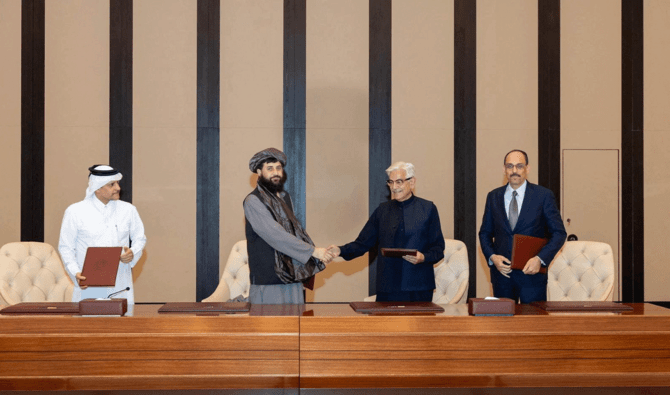
ISTANBUL – Delegations from Pakistan and Afghanistan met in Istanbul on Saturday for a crucial second round of crisis talks aimed at creating a permanent and verifiable peace mechanism following a week of deadly border clashes earlier this month. The meeting, hosted by Turkey, follows an initial round of negotiations in Doha, Qatar, last weekend that resulted in an immediate ceasefire, which has largely held.
The talks are focused on solidifying the temporary calm and establishing a structured framework to prevent future hostilities and, critically, to address Pakistan’s security concerns regarding cross-border terrorism.
Focus on “Verifiable Monitoring Mechanism”
A key priority for Pakistan in the Istanbul discussions is the establishment of a “concrete and verifiable monitoring mechanism” to address the menace of terrorism emanating from Afghan soil. Islamabad accuses the Afghan Taliban authorities of not taking sufficient action against militant groups, particularly the Tehreek-i-Taliban Pakistan (TTP), who use Afghan territory to launch attacks inside Pakistan.
“We look forward to the establishment of a concrete and verifiable monitoring mechanism… to address the menace of terrorism,” a Pakistani Foreign Ministry spokesperson stated ahead of the talks. Pakistan is expected to seek specific, measurable commitments from Kabul, such as the dismantling of known TTP sanctuaries and the arrest or expulsion of key figures.
The Afghan delegation, led by Deputy Interior Minister Mawlawi Rahmatullah Najeeb, has confirmed its participation, stating that the “remaining issues” with Pakistan would be discussed. The Taliban administration, while confirming the talks, has generally rejected Pakistan’s accusation of harboring militants.
From Political Breakthrough to Operational Peace
The first round of talks in Doha, mediated by Qatar and Turkey, provided a political breakthrough by securing a ceasefire after the most severe fighting between the two neighbors since the Taliban returned to power in 2021. The violence, which included Pakistani airstrikes and Afghan retaliation, killed dozens of people and injured hundreds, according to official reports from both sides.
The Istanbul session is expected to transition the agreement from a temporary truce to a structured, operational peace framework. Turkish officials have reportedly indicated that technical committees will examine details of the ceasefire, including mechanisms for monitoring, verification, migration, and border security. Turkey’s role as a facilitator is seen as vital, given its extensive counterterrorism experience and good relations with both nations.
Border Closures and Economic Impact
Despite the ceasefire, the situation remains tense, with major border crossings like Torkham and Chaman remaining closed to trade, except for the controlled exit of Afghan refugees from Pakistan. This has severely impacted bilateral and transit trade, with Afghanistan’s Chamber of Commerce and Industry reporting significant daily losses.
The continuation of the talks in Turkey underscores a mutual commitment to diplomacy, but the success of the Istanbul round hinges on the ability of both sides to agree on a practical and verifiable mechanism to ensure that the cross-border violence that has plagued the region does not resume.
 nddailyupdates.news.blog