
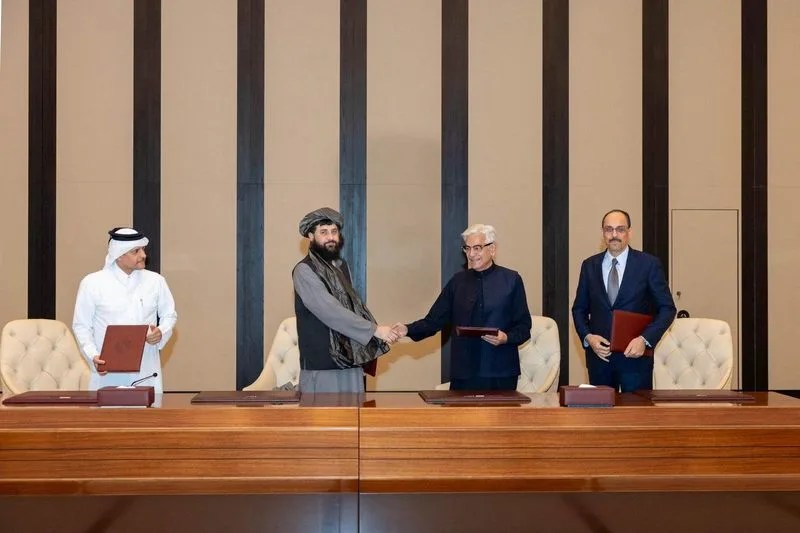
Doha, Qatar – October 19, 2025 – In a significant diplomatic breakthrough, Pakistan and Afghanistan have agreed to an immediate and comprehensive ceasefire following high-level peace talks held in Doha, Qatar. The agreement, mediated by Qatar and Turkey, aims to halt the deadliest border clashes between the two neighboring nations since the Taliban took power in Kabul in 2021.
The announcement was confirmed by Qatar’s Ministry of Foreign Affairs early Sunday morning, stating that delegations from both countries “agreed to an immediate ceasefire and the establishment of mechanisms to consolidate lasting peace and stability.”
The negotiations, led by Pakistan’s Defence Minister Khawaja Muhammad Asif and his Afghan counterpart, Mullah Muhammad Yaqoob, came after more than a week of fierce fighting along the contested 2,600-km (1,600-mile) border, which resulted in dozens of casualties, including soldiers and civilians.
Key Points of the Agreement:
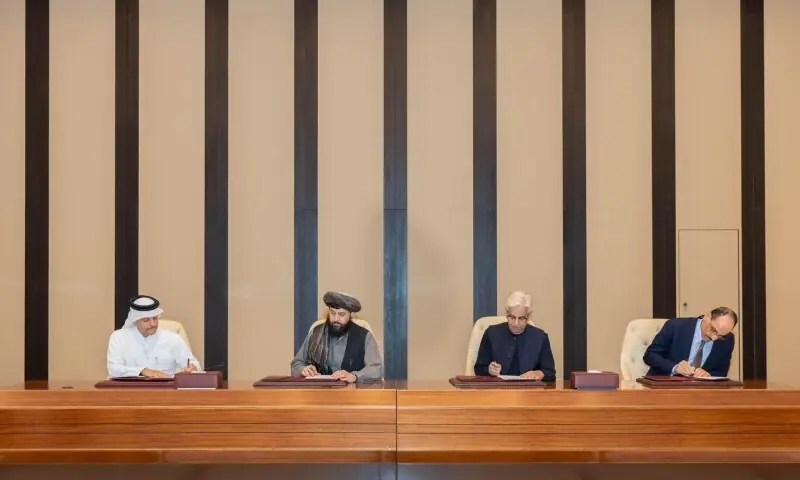
- Immediate Ceasefire: All hostilities and military actions are to cease immediately.
- Follow-up Meetings: Both sides committed to holding follow-up meetings in the coming days, with the next detailed discussion scheduled for October 25 in Istanbul, to ensure the “sustainability of the ceasefire and verify its implementation.”
- Respect for Sovereignty: Pakistan’s Defence Minister Asif stated that “Terrorist attacks from Afghanistan on Pakistan’s soil will cease immediately. Both neighboring countries will respect each other’s territory.” The Afghan side also confirmed a mutual commitment to peace and non-hostile actions.
- Joint Mechanisms: The agreement calls for the establishment of mechanisms to review bilateral claims and ensure the effective enforcement of the truce, likely mediated by the intermediary countries.
The talks were primarily triggered by Islamabad’s demand that the Afghan government rein in militants, including the Tehreek-e-Taliban Pakistan (TTP), who Pakistan alleges operate from safe havens in Afghanistan and have intensified attacks inside its borders. Tensions had escalated dramatically after a suicide bombing on Friday killed seven Pakistani soldiers near the border, followed by Pakistani airstrikes in Afghanistan’s Paktika province.
While the immediate ceasefire offers crucial de-escalation, the path to long-term stability remains fragile. Both sides continue to trade accusations: Pakistan insists its strikes targeted “verified militant camps,” while Afghanistan claims the strikes hit civilian areas, including killing local cricketers, leading to the Afghan Cricket Board pulling out of an upcoming tri-series in Pakistan.
 nddailyupdates.news.blog